Discovering the World of Pastels: A Guide for Artists Who Love Getting Their Hands Dirty

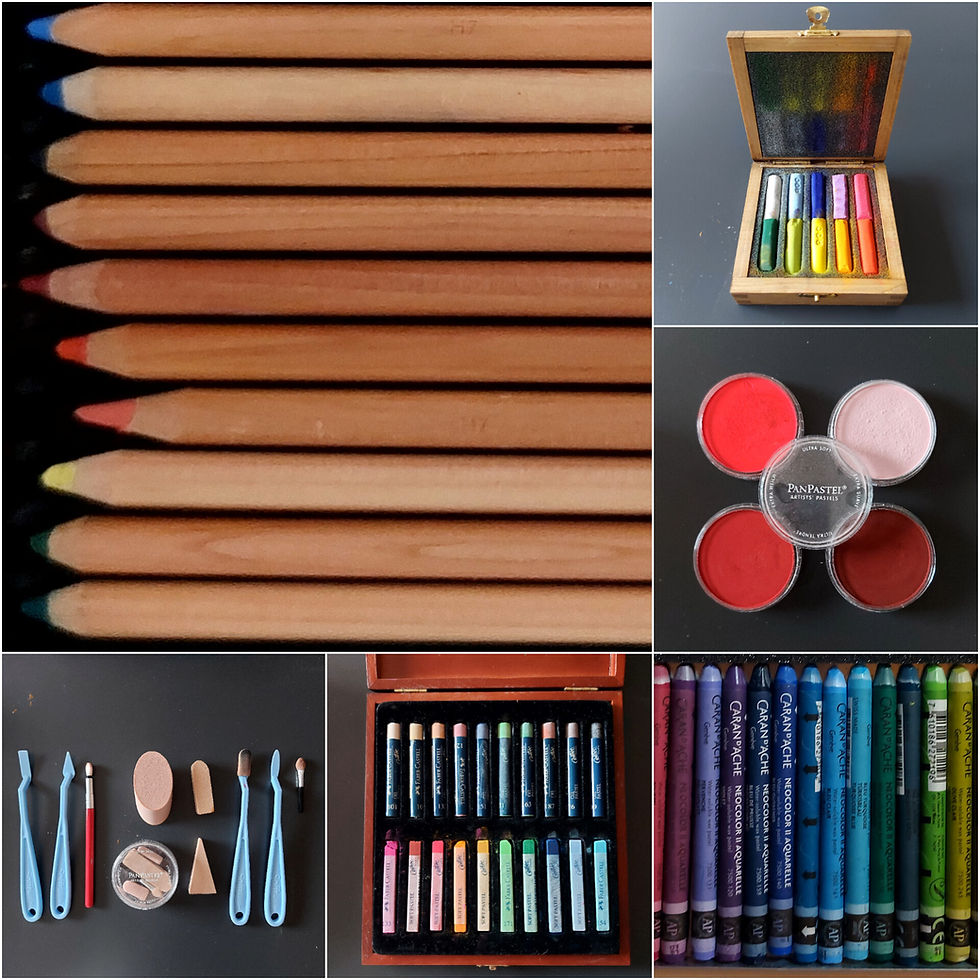
Although the term pastel is often used to indicate the color tone resulting from mixing with white (pastel color), in reality the term pastel refers to a type of friable artistic material made of pigment held together by a binder (glue, gum arabic, oil, or wax), and then allowed to dry.
There are 4 categories available on the market:
Traditional soft or hard pastels
Oil pastels
Wax pastels (also crayons)
Water-soluble wax pastels
Here is a brief overview:
Soft Pastels vs Hard Pastels
Characteristics
Both types come in sticks (round, rectangular, or square) and the main difference between the two is in their composition: while soft pastels, due to the minimal amount of binder they contain, are more chalky, soft, and easy to blend, hard pastels, thanks to the greater amount of binder used in their production, are more compact, durable, and consequently prone to crumbling. This variant is better suited in combination with soft pastels for creating details. Furthermore, precisely because of their composition, soft pastels tend to wear down faster than hard pastels.
Pigmentation/Brightness:
With the same pigment content, soft pastels will appear brighter because the amount of binder they contain is minimal.
Blending
While soft pastels can be blended with each other either with fingers or PanPastel tools, hard pastels, due to the higher amount of binder, are more difficult (but not impossible) to blend with each other using the blending technique. For example, Carbothello pastels, if applied with small strokes and in layers, can be combined with each other, and with each pass the color tends to soften.
Uses
While soft pastels are great for covering large areas and creating the base of the drawing, hard pastels are better suited on top of a layer of soft pastels to create details.
The new frontier of soft pastels: PanPastel Ultra Soft
PanPastel pastel colors are innovative pastel colors sold in round pans, similar to eyeshadows, which are applied with sponges, brushes, and various specialized applicators (soft tools).
They are ultra-fine colors, very pigmented, highly lightfast, and easy to use and blend together thanks to the applicators to create various shades. In colouring books, for example, they are perfect for painting colorful backgrounds or large areas.
The color range consists of 142 colors divided into different types:
standard colors in different shades (light, base, dark, very dark)
pearl colors (6 colors)
metallic colors (6 colors)
PanPastels can also be used as if they were the "ink" of ordinary carbon paper to transfer images onto pastel paper.
Take a regular sheet of printer paper and cover one side with the chosen color.
Place this colored sheet on the pastel paper with the colored side facing the pastel paper.
Place the subject to be transferred on this sheet with the printed side facing up.
With a pencil, trace the outlines with the right pressure so that the subject is "copied" onto the pastel paper.
In the event that the bars crumble over time or as a result of an unexpected fall, it is possible to restore them to their original state by mixing the powders formed with some alcohol (How to Fix Broken PanPastels - Jackson's Art Blog).
The new frontier of hard pastels: pastel pencils
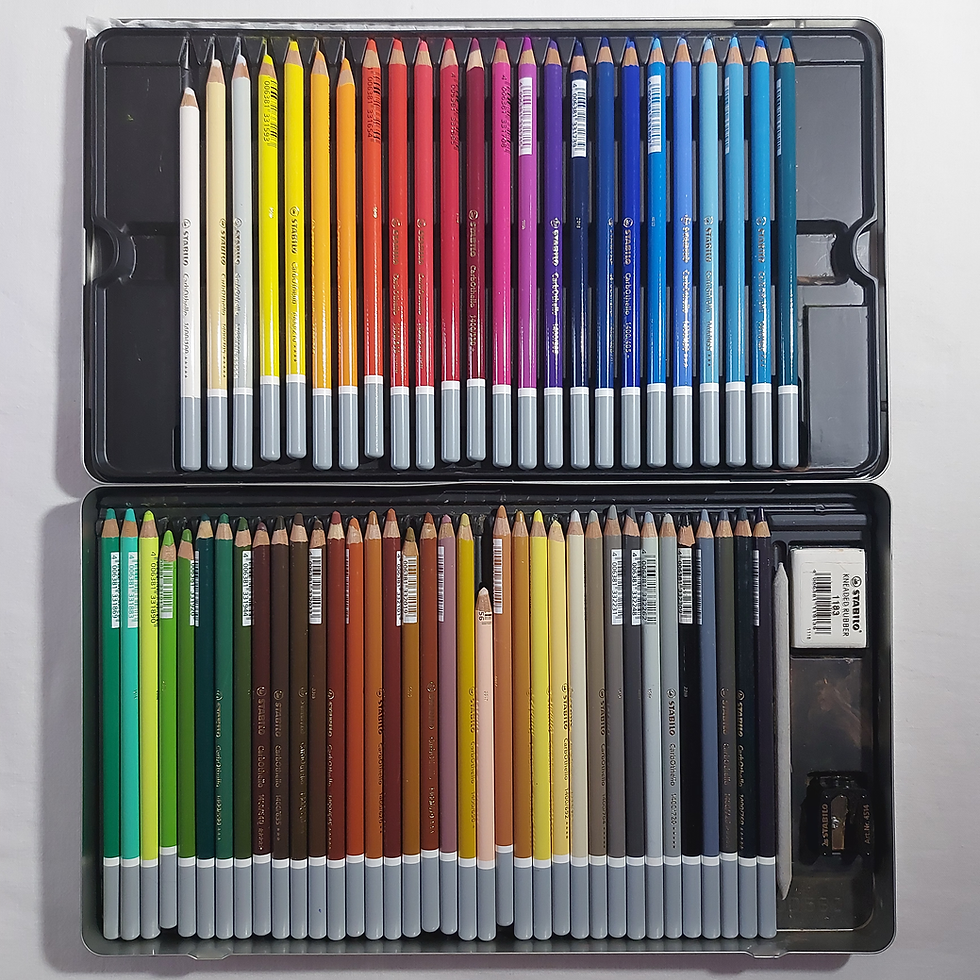
Pastel pencils are part of the category of hard pastels and represent the union of two worlds, that of colored pencils and that of classic hard pastels.
Inside the classic wooden pencil structure is a crumbly core, 4-5 mm in diameter, with a consistency similar to that of dry pastels, composed essentially of pigment held together by a minimal amount of binder.
How to fix finished pastel works
To be able to fix pastel colors to the paper once the work is finished, you can either use fixatives specially designed for this type of technique or you can use regular hairspray (even the lowest quality is optimal for this type of use).
Wax pastels (Crayons)
Crayons are round sticks made of pigment held together by a binder that can be paraffin or beeswax.
Unlike traditional colored pencils, they do not produce dust, are more resistant, compact, durable, and have very bright colors. On the other hand, they are more difficult to blend and have a shiny, more waxy final texture.
Because of their characteristics, they are suitable as coloring products for children and for simple projects.
Watersoluble Crayons Caran d’Ache Neocolor II

Watercolor crayons are a type of art material developed in recent years that combines the idea of traditional wax crayons with the ability to dilute the color with water, creating a watercolor effect without necessarily losing a defined stroke.
Similar to PanPastel, they can be used in colouring books to paint colorful and watercolor-like backgrounds or effects.
Being a watersoluble material, these crayons work optimally on watercolour paper, but thanks to their dry application, they can also be used in coloring books, keeping in mind not to use excessive amounts of water or, for example, to use these colors on small areas. Since coloring books are often not printed on watercolor paper or with very high weight, it is advisable to carry out small tests to check how well the paper can support the color when diluted.
The Neocolor II watercolor crayons by Caran D’Ache are the best on the market and are available in a range of 84 standard colors, sold both individually and in sets, to which new shades are occasionally added through special editions.
They are all very vibrant colors, highly pigmented, and with a good degree of lightfastness.
Pastelli a cera acquerellati_1 Pastelli a cera acquerellati_2
Oil Pastels
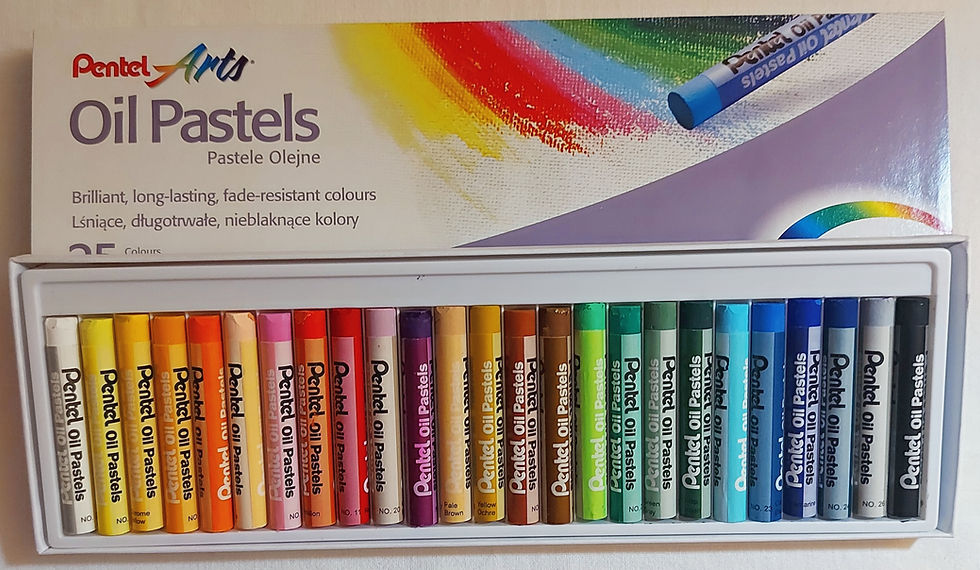
Oil pastels are round sticks made of pigment held together by a binder composed of a mixture of oil and wax, which gives them a pasty, oily consistency as well as perfect adhesion regardless of the surface used.
Unlike traditional pastels, they do not produce dust, are more resistant, compact, durable, and have very bright colors.
They have a creamy texture, similar to oil paints, and, like them, have a slow drying time.
They can be used to create various textures (in combination with other techniques) and, if dissolved in turpentine or other typical oil painting solvents, can be blended with each other similarly to regular oil paints.
And with the oil pastels, we have reached the conclusion of this overview of pastels. In the next post, I will describe pastel pencils in more detail.
If you liked this post or found it useful, let me know in the comments, leave a like, and follow me on social media.
Thank you for reading and see you next time.
Laura


Comments