Velvet on paper without getting your hands dirty: the magic of Pastel Pencils

Pastel pencils represent the union of two worlds, that of colored pencils and that of classic hard pastels.
Inside the classic wooden pencil structure there is a friable lead, 4-5 mm in diameter, with a consistency similar to that of dry pastels, consisting essentially of pigment held together by a minimal amount of binder.
Types of pastel pencils
There are various types of pastel pencils on the market. Here is a small selection:
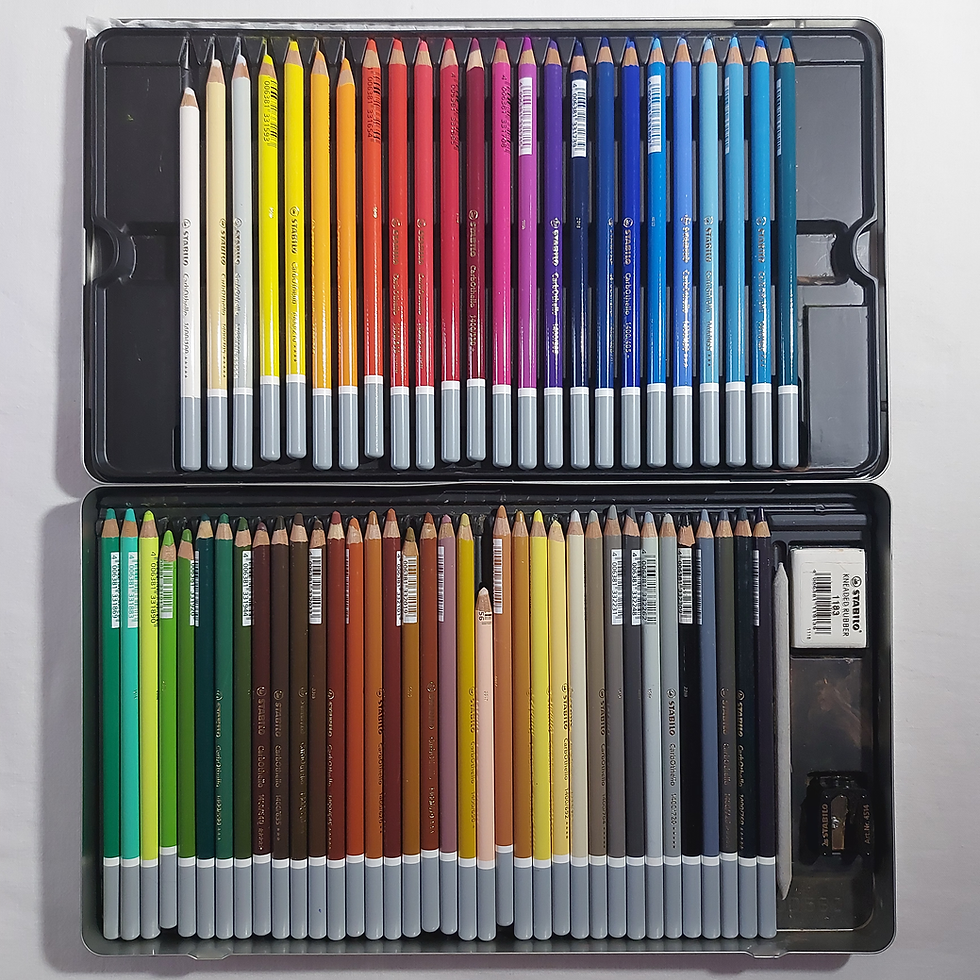
Stabilo Carbothello
Produced in Germany by Stabilo, they are colored pencils that sit halfway between regular pencils, crayons, and charcoal. They have a range of 60 bright, lightfast colors and, thanks to a not too high cost, are suitable for both beginners and professionals. They allow for precise, blendable, and slightly watercolorable strokes. Due to their reasonable cost, I purchased the complete set of 60 and use it as a starting base to complement with individual pencils from other sets, in the missing shades.
To sharpen them, it is necessary to use a pencil sharpener for colored pencils. It is not possible to obtain extremely sharp points, as the wooden casing is not very durable.
They work very well on pastel paper, and the opaque and covering colors are excellent when used on dark or colored pastel paper.
Faber-Castell Pitt Pastell
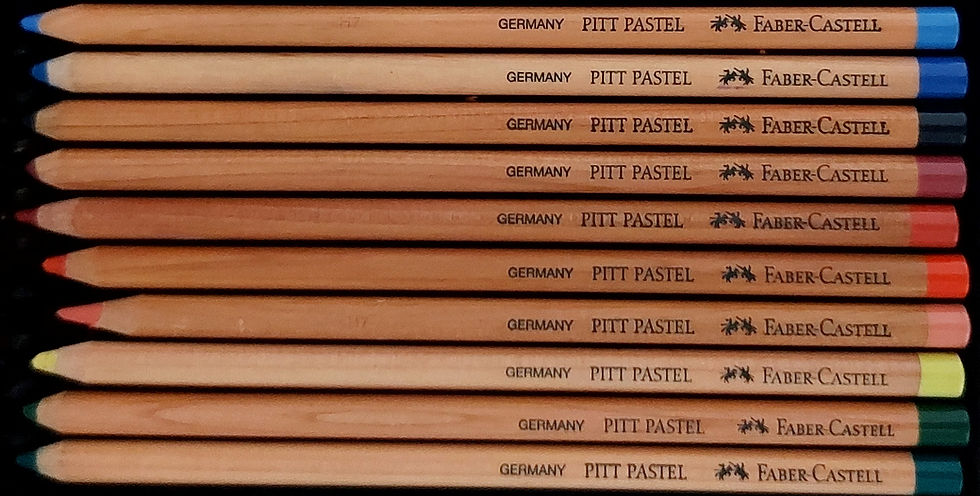
Produced in Germany by Faber-Castell, they are one of the best colored pencils on the market. Available in 60 bright colors (with the same numbering/nomenclature as the Polychromos pencils), lightfast, they allow for fine lines and precise details, are blendable and slightly watercolorable. Easy to sharpen with a desktop sharpener, it is possible to obtain sharp points without difficulty to create details.
They work very well on pastel paper, and the matte and opaque colors are excellent when used on colored pastel paper.
Derwent Pastel Pencils
Produced in Great Britain, they are available in 72 bright and highly pigmented colors and are an alternative to Carbothello. These pencils are also rated lightfast and allow for fine lines, precise details, and are easily blendable. Easy to sharpen with a desk sharpener, it is possible to obtain sharp points without problems to create details.
They work very well on pastel paper, and the opaque and covering colors are excellent when used on colored pastel paper.
Caran d’Ache Pastel Pencils
They are the best pastel pencils on the market. Available in 84 bright, lightfast colors, with a wide, dry core that allows a fine and precise stroke combined with the pigmentation of the pastels. They are blendable and easy to sharpen, and you can easily achieve sharp points.
They work very well on pastel paper, and the opaque and covering colors are excellent when used on colored pastel paper.
Given the fairly high price, they might seem “excessive” for adult coloring unless you intend to gift or resell the finished drawing, with the problem that it would then be exposed to direct light. Consequently, in my case, I mainly use them to complement shades that I cannot find in other sets.
How to sharpen pastel pencils
On one hand, this structure allows for better handling and the possibility of creating details and shading in a delicate way; on the other hand, it is more difficult to obtain a sharp point using regular sharpeners. The sharpener I use is a normal tabletop sharpener for school, and a good point is obtained after just two turns, but there are also special sharpeners developed for this type of material.
Most bright colors have a more fragile/delicate core, which is less suited to achieving a sharp point.
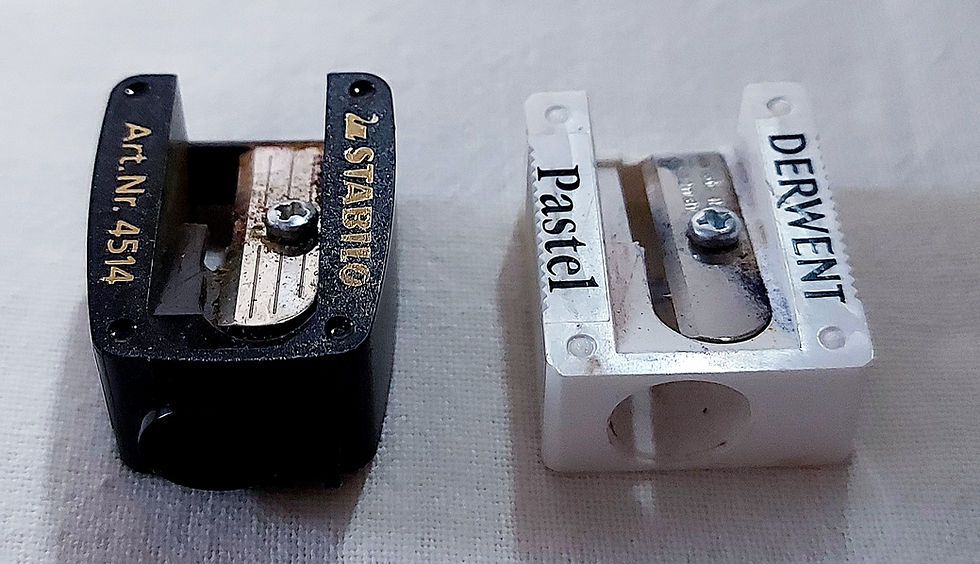
To try to solve this problem, many professional artists use a utility knife that removes the wooden casing, leaving the lead free to be sharpened.
Come evitare sbavature con le matite pastello
Another characteristic of these pencils is the fact that the color tends to powder, and when the hand passes over the freshly colored area, there is always a risk that the color will smudge, ruining itself, and also damaging the rest of the subject. Consequently, similar to regular pastels, it is advisable to always use a sheet of transparent glassine paper on which to rest the hand to avoid smearing the newly applied color. Once the part being colored is finished, it is possible to move this sheet by lifting it rather than sliding it over the subject to avoid unwanted color shifts. The same paper can also be used as protective paper for storing finished works after fixing them with a fixative. Alternatively, transparent paper (tracing paper) can be used instead of glassine, the same that is used for 'tracing' subjects.
And so we have come to the conclusion of this overview of pastel pencils. If you liked this post or found it useful, let me know in the comments, leave a like, and follow me on social media.
Thank you for reading.
Laura


Comments